| 1 |
|
2. Stem cells |
|
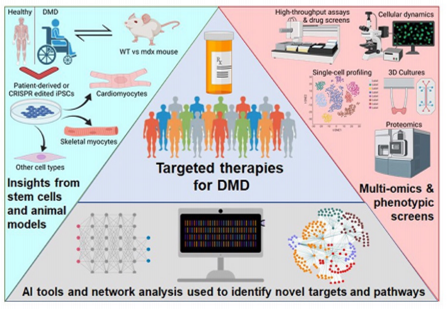
Insights from stem cell and animal model |
Stem cell ips cell |
8 |
-.50
-.25
+.25
เต็ม
0
-35%
+30%
+35%
|
| 2 |
จากบทความที่ให้ไปเรื่อง Phase I randomized, observer-blinded, placebo-controlled study of a SARS-CoV-2 mRNA vaccine PTX-COVID19-B มีกี่ cohort
|
2. 4 |
|
Vaccination with PTX-COVID19-B in 45 subjects of ages between 18- and 64-year-old did not result in any overt safety signal. Local reactions were mild after the first vaccine dose in general. Moderate to severe local pain was observed in a small number of participants (Cohorts 1 6%, and 26.7% for Cohorts 2 and 3). Similarly, systemic reactions were mild for most of the participants. Moderate headaches were observed in 6.7% of Cohort 1 and 13.3% of Cohort 2 participants. Moderate muscle pain was reported in 6.7% of Cohort 3 and 13.3% of Cohort 1 and severe pain was reported in 6.7% of Cohort 2. |
Vaccination with PTX-COVID19-B in 45 subjects of ages between 18- and 64-year-old did not result in any overt safety signal. |
8 |
-.50
-.25
+.25
เต็ม
0
-35%
+30%
+35%
|
| 3 |
ข้อใดเกี่ยวข้องกับ iPSCS
|
2. stem cell |
|
IPS’C หรือ stem cell เป็นเซลล์ต้นกำเนิด |
Structure stem cell or ips cell |
8 |
-.50
-.25
+.25
เต็ม
0
-35%
+30%
+35%
|
| 4 |
ข้อใดเกี่ยวข้องกับ Environmental issue
|
1. Co2 emission |
|
H |
G |
8 |
-.50
-.25
+.25
เต็ม
0
-35%
+30%
+35%
|
| 5 |
DMD progress กระทบเรื่องใด
|
3. abnormal muscle cell |
|
จะกระทบต่อกล้ามเนื้อ แขน กล้ามเนื้อเรียบ |
DMD |
8 |
-.50
-.25
+.25
เต็ม
0
-35%
+30%
+35%
|
| 6 |
ข้อใดเกี่ยวข้องกับ Trial vaccine and placebo
|
4. GqP |
|
Ee |
Ddd |
8 |
-.50
-.25
+.25
เต็ม
0
-35%
+30%
+35%
|
| 7 |
ข้อใดไม่เกี่ยวข้องกับ Collision theory
|
4. predict the rates of reactions in many different contexts |
|
Bbn |
Nnn |
8 |
-.50
-.25
+.25
เต็ม
0
-35%
+30%
+35%
|
| 8 |
ข้อใดไม่เกี่ยวข้องกับ Chemical measurement
|
4. heat theory |
|
Hot |
J Vaccination with PTX-COVID19-B in 45 subjects of ages between 18- and 64-year-old did not result in any overt safety signal. |
8 |
-.50
-.25
+.25
เต็ม
0
-35%
+30%
+35%
|
| 9 |
ข้อใดเกี่ยวข้องกับ Analyses of CD4+ T cell
|
2. computational method |
|
Studies proposing predictive models of COVID19 vaccine efficacy using data from approved vaccines, indicate that neutralizing antibody titers above twofold the value of HCS are predictive of over 80% efficacy protection against SARS-CoV2 ancestral strain infection15. This small phase 1 trial showed that PTX-COVID19-B induced neutralization titers, that are more than 8, 16 and 44 fold higher than convalescent sera at 16 μg, 40 μg and 100 μg respectively (P < 0.001). These results suggest that |
The 40-µg dose was selected to progress into a Phase 2 clinical trial, because it had the right balance between the immune response and satisfactory reactogenicity profile. |
8 |
-.50
-.25
+.25
เต็ม
0
-35%
+30%
+35%
|
| 10 |
ข้อใดเกี่ยวข้องกับ Anti-S ELISA
|
1. anti-SARS-CoV-2 S IgG specific antibody |
|
Mediagnost anti-SARS-CoV-2 ELISA is a highly specific enzyme immunoassay for the detection of IgG antibodies directed against SARS-CoV-2-S1 Receptor Binding Domain (RBD) in human blood. The anti-SARS-CoV-2 ELISA is For Research Use Only. Not for use in diagnostic procedures. The product is intended for use by professional persons only.
|
Storage/Expiration
Upon receipt store the kit at 2-8°C. The shelf life of the components after initial opening is warranted for 4 weeks, store the unused strips and microtiter wells airtight together with the desiccant at 2-8°C in the clip-lock bag, use in the frame provided. The 1:20 diluted Washing Buffer WP is stable at 2-8°C for 4 weeks.
Intra-assay (Within-Run)
n = 30
CV = < 10%
Inter-assay (Run-to-Run)
n = 53
CV = < 12% |
8 |
-.50
-.25
+.25
เต็ม
0
-35%
+30%
+35%
|
| 11 |
ข้อใดไม่เกี่ยวข้องกับ โภชนาการและพิษวิทยาอย่างไร?
|
2. drugs, pesticides, heavy metals and carcinogens |
|
Jjkkk |
,, |
8 |
-.50
-.25
+.25
เต็ม
0
-35%
+30%
+35%
|
| 12 |
ข้อใดไม่เกี่ยวข้องกับ interdisciplinary aspects ในเชิงการแพทย์
|
4. addresses individual differences |
|
Jj |
Iii |
8 |
-.50
-.25
+.25
เต็ม
0
-35%
+30%
+35%
|
| 13 |
ข้อใดเกี่ยวข้องกับ neutralization assay
|
3. Structural protein |
|
Protein |
,, |
8 |
-.50
-.25
+.25
เต็ม
0
-35%
+30%
+35%
|
| 14 |
ข้อใดเกี่ยวข้องกับ patterns of ‘tissue-states”
|
3. disparate datasets |
|
We focused on astrocytes, which are key elements of the glioma microenvironment and are not well represented in glioma single-cell RNAseq datasets2,7,8,9,10,11,12,19. A recent paper implicated GBM-associated astrocytes in promoting an |
metallothionein genes (MT1H, MT1G, MT1M, MT1F, MT1E, MT1X, MT2A, and MT3—increased in reactive astrocytes23), Synuclein genes (SNCA, SNCB, and SNCG), WIF1, CHI3L2 (associated with poor prognosis in glioma24), ALDOC, ALDOA, AQP4, carbonic anhydrases CA2 and CA11, and CXCL14, a cytokine implicated in promoting glioma invasion25 (Supplementary Dataset 4). Conversely, genes higher in CNVpos glioma include EGFR, PTPRZ1, NOVA1, CD24, Nestin (NES), SOX5, and SOX4. We used KEGG pathway enrichment analysis to query the function of these genes (Fig. 3). Further analysis of the differentially expressed genes showed that several KEGG |
8 |
-.50
-.25
+.25
เต็ม
0
-35%
+30%
+35%
|
| 15 |
ข้อใดไม่เกี่ยวข้องกับ Thick film metrology tools X-ray กับ metrology
|
2. ex-situ investigation |
|
L |
L |
8 |
-.50
-.25
+.25
เต็ม
0
-35%
+30%
+35%
|
| 16 |
ข้อใดไม่เกี่ยวข้องกับการใช้ AI เป็นส่วนประกอบในการทดลอง
|
1. machine-learning algorithms |
|
K |
L |
8 |
-.50
-.25
+.25
เต็ม
0
-35%
+30%
+35%
|
| 17 |
ข้อใดเกี่ยวข้องกับ Immunogenicity assessments
|
5. Anti-S and anti-RBD MID assay |
|
L |
. |
8 |
-.50
-.25
+.25
เต็ม
0
-35%
+30%
+35%
|
| 18 |
ข้อใดเกี่ยวข้องกับ cellular identities
|
2. the identification of cell types at an unprecedented resolution |
|
Glioblastoma (GBM) diffusely infiltrates the brain and intermingles with non-neoplastic brain cells, including astrocytes, neurons and microglia/myeloid cells. This complex mixture of cell types forms the biological context for therapeutic response and tumor recurrence. We used single-nucleus RNA sequencing and spatial transcriptomics to determine the cellular composition and transcriptional states in primary and recurrent glioma and identified three compositional ‘tissue-states’ defined by cohabitation patterns between specific subpopulations of neoplastic and non-neoplastic brain cells. These tissue-states correlated with radiographic, histopathologic, and prognostic features and were enriched in distinct metabolic pathways. Fatty acid biosynthesis was enriched in the tissue-state defined by the cohabitation of astrocyte-like/mesenchymal glioma cells, reactive astrocytes, and macrophages, and was associated with recurrent GBM and shorter survival. Treating acute slices of GBM with a fatty acid synthesis inhibitor depleted the transcriptional signature of this pernicious tissue-state. These findings point to therapies that target interdependencies in the GBM microenvironment.
|
Re-convolving the compositional landscape of primary and recurrent glioblastoma reveals prognostic and targetable tissue states
|
8 |
-.50
-.25
+.25
เต็ม
0
-35%
+30%
+35%
|
| 19 |
ข้อใดเกี่ยวข้องกับ cancer pathophysiology
|
3. therapeutic response |
|
Early studies used bulk RNA-sequencing approaches to understand GBM states in MRI-localized samples from contrast-enhancing (CE) and non-contrast-enhancing (NCE) margins3,4,5,6. Higher resolution is attained using single-cell RNAseq (scRNAseq) approaches, which are being increasingly used to understand |
heterogeneity in gliomas. Several studies have employed scRNAseq from freshly resected surgical samples to explore the heterogeneity of GBM2,7,8,9,10,11,12. These studies have significantly advanced our understanding of the heterogeneity and pathology of glioma. However, application of whole-cell scRNAseq is faced with practical challenges related to the limitations of acquiring and processing freshly resected glioma tissue and the technical incompatibility with banked frozen glioma tissue. Moreover, scRNAseq is limited in sampling non-neoplastic cells of the microenvironment like neurons and astrocytes, which are major constituents of the tumor-margins2,8,9,10,11, in part because of cell-type survivability/selection bias during tissue dissociation. Thus, while advances have been made in defining the genetic alterations in glioma13,14 and the transcriptional states of glioma cells and immune cells15,16,17,18, comprehensive analyses of cellular composition and diversity of cellular phenotypes in primary and recurrent gliomas remain a challenge. |
8 |
-.50
-.25
+.25
เต็ม
0
-35%
+30%
+35%
|
| 20 |
ข้อใดไม่เกี่ยวข้องกับการทำ Vaccine
|
1. Economic Rationality |
|
In this work, we circumvent these limitations of scRNAseq by using single-nucleus RNA-sequencing (snRNAseq), allowing us to analyze frozen tissue, and inclusively sample cells of the microenvironment from primary and recurrent glioma. We sample glioma-infiltrated tissue from cellular tumor to minimally infiltrated surrounding brain tissue at the single-cell level. Transcriptional analysis of copy-number variations (CNVs) provided a metric to distinguish neoplastic (CNVpos) and non-neoplastic (CNVneg) nuclei, and unbiased clustering reveals that primary and recurrent tumors harbor CNVpos glioma cells with similar transcriptional states. Conversely, the microenvironment of primary and recurrent glioma displays distinct cell-type-specific states and different compositional landscapes. Leveraging information from the snRNAseq-derived compositional make-up of glioma-infiltrated samples defines three generalizable “tissue-states” with each tissue-state showing enrichment for specific gene signatures that can be identified in bulk RNAseq samples. We also examine these compositional patterns using spatial transcriptomics, which reveals colocalization of specific neoplastic and non-neoplastic cell types. We demonstrate that tissue-states are prognostically relevant and display metabolic dependencies that can be pharmacologically targeted. |
comprehensive analyses of cellular composition and diversity of cellular phenotypes in primary and recurrent gliomas remain a challenge. |
8 |
-.50
-.25
+.25
เต็ม
0
-35%
+30%
+35%
|