| 1 |
|
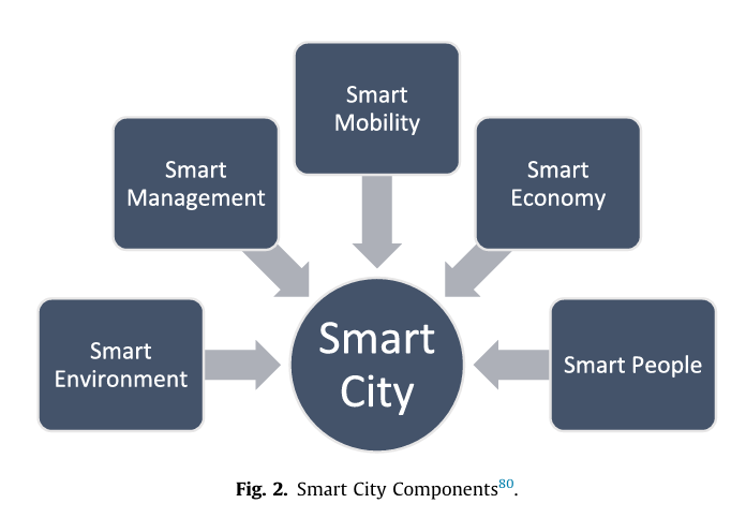
4. Smart Environment |
|
Since it is crucial to include the public value. social and environmental Profits and social and Environmental costs (fig.4) sets the non-Profit BMC apart from the original canvas. Therefore, Smart Environment is the component that directly aligns with the goals of social entrepreneurship unilizing sustainable technologies.
|
P.82 Fig. 3. Business modelling framework for smart cities. since it is crucial to in crucial to include the public value. smart
Clity BMC by Giourka et. al.(2021)
|
7 |
-.50
-.25
+.25
เต็ม
0
-35%
+30%
+35%
|
| 2 |
|
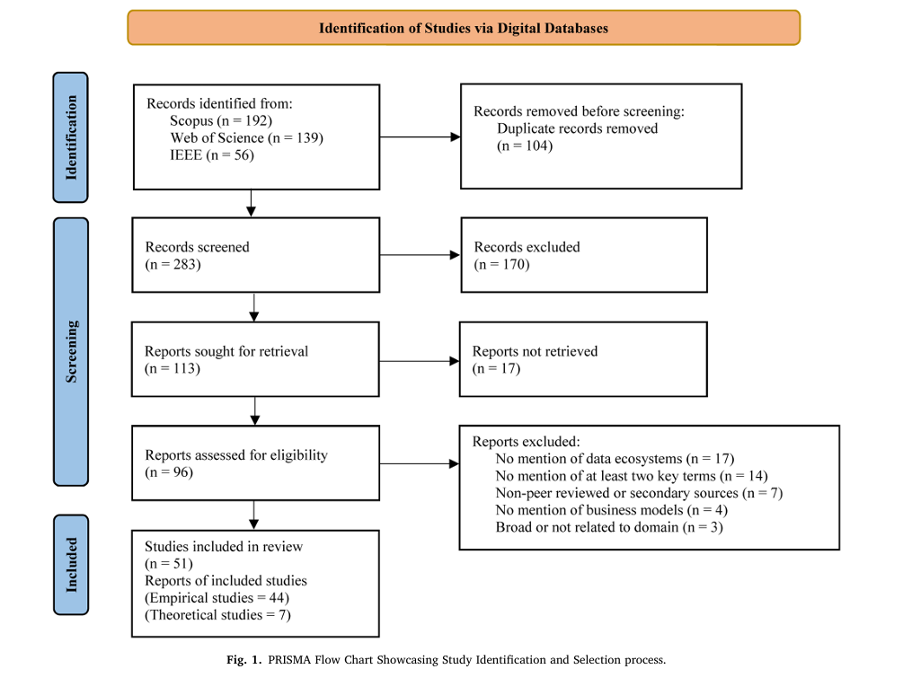
2. The systematic and transparent process used to ensure research quality and relevance |
|
Literture Review (SLR) the main purpose of this diagram is to systematic and transparent
research screening process
|
PRISMA 2020 statement. tranfield, Denyer & Smart (2003). Kitchenham & Charters (2007).
|
7 |
-.50
-.25
+.25
เต็ม
0
-35%
+30%
+35%
|
| 3 |
Which statement best describes the primary aim of the study?
|
2. To propose a framework for smart and healthy city operational design. |
|
The Smart and healthy City Business Model canvas - A post covid-19 resililence for smart city Business Modeling Framework.
|
Business Model Canvas + Smart City Framework + WHO Healthy City & Resilience Theory. Business Model Canvas + Smart City Framework + WHO Healthy City & Resilience Theory
|
7 |
-.50
-.25
+.25
เต็ม
0
-35%
+30%
+35%
|
| 4 |
The original Business Model Canvas (BMC) consists of how many fundamental building blocks?
|
3. Nine |
|
Business Model Canvas (BMC) by Alexander Osterwalder และ Yves Pigneur (2010)
in book Business Model Generation (building blocks)
1. Customer Segments
2. Value Propositions
3. Channels
4. Customer Relationships
5. Revenue Streams
6. Key Resources
7. Key Activities
8. Key Partnerships
9. Cost Structure
|
Osterwalder, A., & Pigneur, Y. (2010). Business Model Generation: A Handbook for Visionaries, Game Changers, and Challengers. Hoboken, NJ: John Wiley & Sons.
|
7 |
-.50
-.25
+.25
เต็ม
0
-35%
+30%
+35%
|
| 5 |
Why did researchers modify the BMC for public administration use?
|
2. To include social and environmental values. |
|
The researchers expanded the original BMC from nine components to include
→ Preventive Measures, Therapeutic Urbanism, Health Costs, Health Benefits, and Environmental & Social Impacts
in order to address the social and environmental values of smart cities in the post-COVID-19 era.
|
Osterwalder, A., & Pigneur, Y. (2010). Business Model Generation. Wiley.
Rosati, F., Conticelli, E., & D’Alessandro, D. (2025). The Smart and Healthy City Business Model Canvas—A Post Covid-19 Resilience for Smart City Business Modeling Framework.
|
7 |
-.50
-.25
+.25
เต็ม
0
-35%
+30%
+35%
|
| 6 |
Which new components were proposed for the Smart and Healthy City BMC?
|
2. Preventive and therapeutic urbanism |
|
The researchers expanded the original Business Model Canvas (BMC) from nine components by adding new dimensions related to health and urban resilience in the post-COVID-19 era, including:
• Preventive Measures → preventive health strategies
• Therapeutic Urbanism → healing-oriented urban design
|
Rosati, F., Conticelli, E., & D’Alessandro, D. (2025). The Smart and Healthy City Business Model Canvas—A Post Covid-19 Resilience for Smart City Business Modeling Framework. Elsevier.
|
7 |
-.50
-.25
+.25
เต็ม
0
-35%
+30%
+35%
|
| 7 |
Who are considered the “Network Beneficiaries” in SHC-BMC?
|
3. Communities, governments, researchers, and non-profits |
|
It is clearly stated that the SHC-BMC (Smart & Healthy City Business Model Canvas) does not focus solely on the business sector but rather emphasizes multi-stakeholder collaboration.
|
Rosati, F., Conticelli, E., & D’Alessandro, D. (2025). The Smart and Healthy City Business Model Canvas — A Post Covid-19 Resilience for Smart City Business Modeling Framework. Elsevier.
|
7 |
-.50
-.25
+.25
เต็ม
0
-35%
+30%
+35%
|
| 8 |
How does SHC-BMC contribute to SDG 11?
|
2. Through integrating health, innovation, and sustainable urban design |
|
This model aims to create a Smart and Healthy City by integrating three core dimensions:
• Health → the well-being of citizens
• Innovation → innovation in urban management and technology
• Sustainable Urban Design → environmentally friendly and sustainable city design
|
Rosati, F., Conticelli, E., & D’Alessandro, D. (2025). The Smart and Healthy City Business Model Canvas—A Post Covid-19 Resilience for Smart City Business Modeling Framework. Elsevier.
|
7 |
-.50
-.25
+.25
เต็ม
0
-35%
+30%
+35%
|
| 9 |
What role does the Health Belief Model play in this research?
|
2. It provides a psychological basis for citizens’ health behaviors. |
|
The Health Belief Model (HBM) serves as a psychological basis for explaining citizens’ health behaviors in smart cities.
|
Rosati, F., Conticelli, E., & D’Alessandro, D. (2025). The Smart and Healthy City Business Model Canvas—A Post Covid-19 Resilience for Smart City Business Modeling Framework. Elsevier.
Rosenstock, I. M. (1974). The Health Belief Model and Preventive Health Behavior. Health Education Monographs, 2(4), 354–386.
|
7 |
-.50
-.25
+.25
เต็ม
0
-35%
+30%
+35%
|
| 10 |
Who will benefit most from applying SHC-BMC?
|
2. Policymakers, planners, and investors |
|
Those who benefit the most from applying the SHC-BMC are
policymakers, urban planners, and investors,
as the model supports comprehensive strategic decision-making across health, environmental, and urban economic dimensions.
|
Rosati, F., Conticelli, E., & D’Alessandro, D. (2025). The Smart and Healthy City Business Model Canvas—A Post Covid-19 Resilience for Smart City Business Modeling Framework. Elsevier.
|
7 |
-.50
-.25
+.25
เต็ม
0
-35%
+30%
+35%
|
| 11 |
Why is co-creation critical to smart and healthy city frameworks?
|
3. It ensures diverse stakeholder input for innovation and resilience. |
|
Co-creation is a key element as it fosters the participation of diverse stakeholders in developing localized and sustainable urban solutions.
|
The SHC-BMC framework emphasizes co-creation among public, private, and community stakeholders to enhance local resilience, inclusiveness, and sustainable innovation in urban health management.
|
7 |
-.50
-.25
+.25
เต็ม
0
-35%
+30%
+35%
|
| 12 |
What does “CBBM” primarily emphasize?
|
2. Community and data-driven collaboration |
|
The Community-Based Business Model (CBBM) primarily emphasizes community and data-driven collaboration, fostering multi-stakeholder engagement through shared data ecosystems to promote sustainable agricultural and forestry management
|
|
7 |
-.50
-.25
+.25
เต็ม
0
-35%
+30%
+35%
|
| 13 |
Which of the following is NOT listed as a benefit of CBBM?
|
4. Reduction of stakeholder engagement |
|
Because CBBM emphasizes community and stakeholder participation as the core element of the model.
|
Wijesinghe, K., & Ranabahu, N. (2024). Community-Based Business Models for Agricultural and Forestry Data Ecosystems: A Systematic Literature Review. Elsevier.
|
7 |
-.50
-.25
+.25
เต็ม
0
-35%
+30%
+35%
|
| 14 |
What is identified as a major barrier to implementing data-driven models?
|
2. High cost and regulatory restrictions |
|
Because both high costs and legal or regulatory restrictions are major obstacles to the use of data at the community level.
|
Wijesinghe, K., & Ranabahu, N. (2024). Community-Based Business Models for Agricultural and Forestry Data Ecosystems: A Systematic Literature Review. Elsevier.
|
7 |
-.50
-.25
+.25
เต็ม
0
-35%
+30%
+35%
|
| 15 |
Why does the forestry sector lag behind agriculture in CBBM adoption?
|
2. Longer production cycles and ecological variability |
|
Because the forestry sector faces longer production cycles and ecological variability, its adoption of CBBM has progressed more slowly than in the agricultural sector.
|
Wijesinghe, K., & Ranabahu, N. (2024). Community-Based Business Models for Agricultural and Forestry Data Ecosystems: A Systematic Literature Review. Elsevier.
|
7 |
-.50
-.25
+.25
เต็ม
0
-35%
+30%
+35%
|
| 16 |
Which regulation is cited as a legal barrier to data-driven business models?
|
2. General Data Protection Regulation (GDPR) |
|
The main legal barrier is the GDPR, as it imposes strict limitations on the access and exchange of personal data, making data-driven business models less flexible to implement. This makes it more difficult to implement data-driven models at the community or business level.
|
Wijesinghe, K., & Ranabahu, N. (2024). Community-Based Business Models for Agricultural and Forestry Data Ecosystems: A Systematic Literature Review. Elsevier.
|
7 |
-.50
-.25
+.25
เต็ม
0
-35%
+30%
+35%
|
| 17 |
What human-related barrier affects data-driven CBBMs?
|
2. Shortage of skilled employees in data analytics |
|
The key human-related barrier is the shortage of skilled personnel in data analytics, which limits the effective utilization of data in community-based business models.
|
Wijesinghe, K., & Ranabahu, N. (2024). Community-Based Business Models for Agricultural and Forestry Data Ecosystems: A Systematic Literature Review. Elsevier.
|
7 |
-.50
-.25
+.25
เต็ม
0
-35%
+30%
+35%
|
| 18 |
How can forestry benefit from data-driven models according to Mann et al.?
|
1. Through community recreation and educational initiatives |
|
Because the forestry sector can utilize data to create learning activities and community engagement initiatives that promote the sustainable conservation and development of natural resources.
|
Wijesinghe, K., & Ranabahu, N. (2024). Community-Based Business Models for Agricultural and Forestry Data Ecosystems: A Systematic Literature Review. Elsevier.
|
7 |
-.50
-.25
+.25
เต็ม
0
-35%
+30%
+35%
|
| 19 |
What concept ensures competitiveness in data-driven CBBMs?
|
2. Multidirectional knowledge transfer |
|
Because multidirectional knowledge transfer is the key to enhancing the competitiveness of community-based business models (CBBMs) driven by data.
|
Wijesinghe, K., & Ranabahu, N. (2024). Community-Based Business Models for Agricultural and Forestry Data Ecosystems: A Systematic Literature Review. Elsevier.
|
7 |
-.50
-.25
+.25
เต็ม
0
-35%
+30%
+35%
|
| 20 |
Why are long-term partnerships considered both a benefit and a barrier?
|
2. They ensure stability but are hard to maintain. |
|
Because long-term partnerships provide stability and trust in community-based ecosystems, but maintaining them requires continuous coordination, resources, and effort, which makes them difficult to sustain in practice.
|
Wijesinghe, K., & Ranabahu, N. (2024). Community-Based Business Models for Agricultural and Forestry Data Ecosystems: A Systematic Literature Review. Elsevier.
|
7 |
-.50
-.25
+.25
เต็ม
0
-35%
+30%
+35%
|