| 1 |
|
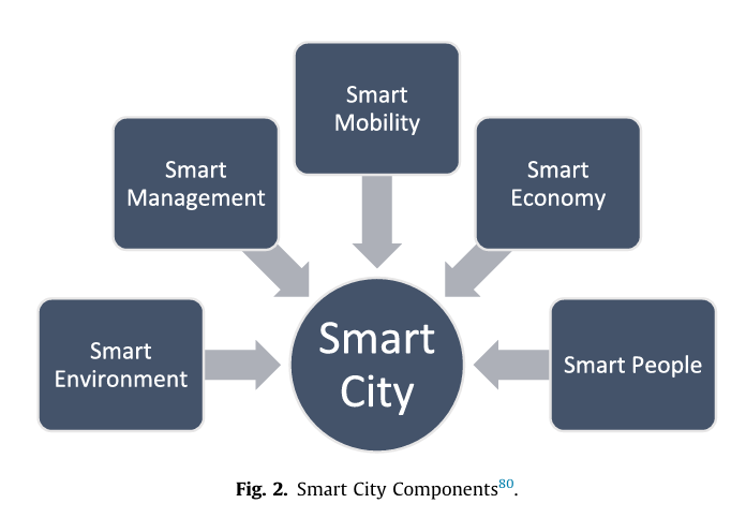
4. Smart Environment |
|
Because smart environment support and will lead to social entrepreneurship.
|
Fig 2 : Smart City Components, include ‘smart environment’
|
7 |
-.50
-.25
+.25
เต็ม
0
-35%
+30%
+35%
|
| 2 |
|
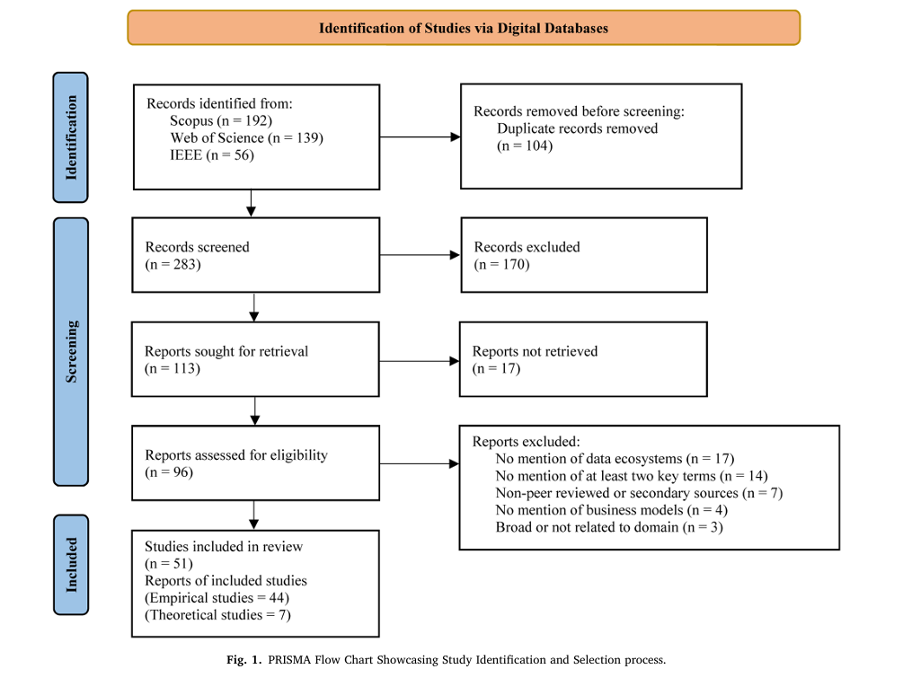
3. The effectiveness of higher education management reforms |
|
Because this PRISMA flow chart shows the steps to separate unnecessary research to only have quality and practical research.
|
Preliminary screening and study retrieval: removing redundant and classification of data sources.
|
7 |
-.50
-.25
+.25
เต็ม
0
-35%
+30%
+35%
|
| 3 |
Which statement best describes the primary aim of the study?
|
2. To propose a framework for smart and healthy city operational design. |
|
Because the primary aim of this study is Smart and Healthy City, which will help cities recover from the pandemic and better cope with it.
|
SHC-BMC
|
7 |
-.50
-.25
+.25
เต็ม
0
-35%
+30%
+35%
|
| 4 |
The original Business Model Canvas (BMC) consists of how many fundamental building blocks?
|
3. Nine |
|
Because the elements of business model have nine building blocks.
|
The elements of business model structure: nine building blocks make up the BMC framework.
|
7 |
-.50
-.25
+.25
เต็ม
0
-35%
+30%
+35%
|
| 5 |
Why did researchers modify the BMC for public administration use?
|
2. To include social and environmental values. |
|
Researchers have adapted the Business Model Canvas (BMC) for public sector management, as public sector organizations are focused on creating social, environmental and public value, unlike profit-oriented private businesses.
|
Practical examples of cities that have successfully implemented smart and health city initiatives: public administration
|
7 |
-.50
-.25
+.25
เต็ม
0
-35%
+30%
+35%
|
| 6 |
Which new components were proposed for the Smart and Healthy City BMC?
|
2. Preventive and therapeutic urbanism |
|
The new component is created to achieve the needs of smart and healthy city.
|
Fig.7 The Smart and Healthy City Business Model Canvas (SHC-BMC)
|
7 |
-.50
-.25
+.25
เต็ม
0
-35%
+30%
+35%
|
| 7 |
Who are considered the “Network Beneficiaries” in SHC-BMC?
|
3. Communities, governments, researchers, and non-profits |
|
The component identifies all target users within the smart city ecosystem that create value, including multiple stakeholders.
|
The development of smart and healthy city business model canvas.
|
7 |
-.50
-.25
+.25
เต็ม
0
-35%
+30%
+35%
|
| 8 |
How does SHC-BMC contribute to SDG 11?
|
2. Through integrating health, innovation, and sustainable urban design |
|
Because SDG 11 means Sustainable Development Goal 11, it aiming to make cities and human settlements inclusive, safe, and sustainable.
|
In the article, the paragraph titled ‘Abstact SDG 11’.
|
7 |
-.50
-.25
+.25
เต็ม
0
-35%
+30%
+35%
|
| 9 |
What role does the Health Belief Model play in this research?
|
2. It provides a psychological basis for citizens’ health behaviors. |
|
Because HBM explain how people perce health risks and preve benefits, and how technology influences citizens’ health behaviors.
|
The Health Belief Model (HBM)
|
7 |
-.50
-.25
+.25
เต็ม
0
-35%
+30%
+35%
|
| 10 |
Who will benefit most from applying SHC-BMC?
|
2. Policymakers, planners, and investors |
|
Because the SHC-MBC is mainly used for designing, planning and evaluating smart-health city solutions. And they use the model to make strategic decisions.
|
In the article, the paragraph titled ‘Material and methods SHC-BMC?‘.
|
7 |
-.50
-.25
+.25
เต็ม
0
-35%
+30%
+35%
|
| 11 |
Why is co-creation critical to smart and healthy city frameworks?
|
3. It ensures diverse stakeholder input for innovation and resilience. |
|
It was a collaborative decision by many people to achieve effective and practical results.
|
The development of smart and healthy city businesses model canvas
|
7 |
-.50
-.25
+.25
เต็ม
0
-35%
+30%
+35%
|
| 12 |
What does “CBBM” primarily emphasize?
|
2. Community and data-driven collaboration |
|
CBBM Stands for community-based business model. It emphasizes the data-driven CBBMS in agriculture and forestry.
|
Community-based business model (CBBM)
|
7 |
-.50
-.25
+.25
เต็ม
0
-35%
+30%
+35%
|
| 13 |
Which of the following is NOT listed as a benefit of CBBM?
|
4. Reduction of stakeholder engagement |
|
Reduction of stakeholder engagement is not the benefit, in contrast, it increases the engagement of stakeholders.
|
Data-driven CBBMS in agriculture and forestry.
|
7 |
-.50
-.25
+.25
เต็ม
0
-35%
+30%
+35%
|
| 14 |
What is identified as a major barrier to implementing data-driven models?
|
2. High cost and regulatory restrictions |
|
It is the high cost of technology, infrastructure, and skilled personnel, along with strict data protection and privacy regulations.
|
Significant community-directed and socio-economic barriers.
|
7 |
-.50
-.25
+.25
เต็ม
0
-35%
+30%
+35%
|
| 15 |
Why does the forestry sector lag behind agriculture in CBBM adoption?
|
2. Longer production cycles and ecological variability |
|
There is high ecological variability, forest ecosystems are more complex and less predictable than agricultural systems.
|
Data-driven CBBMS in agriculture VS forestry.
|
7 |
-.50
-.25
+.25
เต็ม
0
-35%
+30%
+35%
|
| 16 |
Which regulation is cited as a legal barrier to data-driven business models?
|
2. General Data Protection Regulation (GDPR) |
|
It creates compliance challenges for organizations using large-scale or AI-driven data systems.
|
Table: distribution of identified factors, theme, barriers and benefits.
|
7 |
-.50
-.25
+.25
เต็ม
0
-35%
+30%
+35%
|
| 17 |
What human-related barrier affects data-driven CBBMs?
|
2. Shortage of skilled employees in data analytics |
|
This makes data-driven CBBMS inefficient because there are no employees with expertise in this area.
|
Significant technological barriers.
|
7 |
-.50
-.25
+.25
เต็ม
0
-35%
+30%
+35%
|
| 18 |
How can forestry benefit from data-driven models according to Mann et al.?
|
1. Through community recreation and educational initiatives |
|
According to Mann et al., forestry benefits from data-driven models through community, recreation, and education initiatives.
|
Data-driven CBBMS in agriculture and forestry.
|
7 |
-.50
-.25
+.25
เต็ม
0
-35%
+30%
+35%
|
| 19 |
What concept ensures competitiveness in data-driven CBBMs?
|
2. Multidirectional knowledge transfer |
|
It is the open exchange of knowledge among stakeholders drives innovation and sustainable value creation.
|
Abstract: Multidirectional Knowledge Transfer
|
7 |
-.50
-.25
+.25
เต็ม
0
-35%
+30%
+35%
|
| 20 |
Why are long-term partnerships considered both a benefit and a barrier?
|
2. They ensure stability but are hard to maintain. |
|
They can also be difficult to maintain due to changing priorities, resources, or external conditions
|
Main benefits and main barriers of CBBM.
|
7 |
-.50
-.25
+.25
เต็ม
0
-35%
+30%
+35%
|