| 1 |
|
2. Warfarin |
|
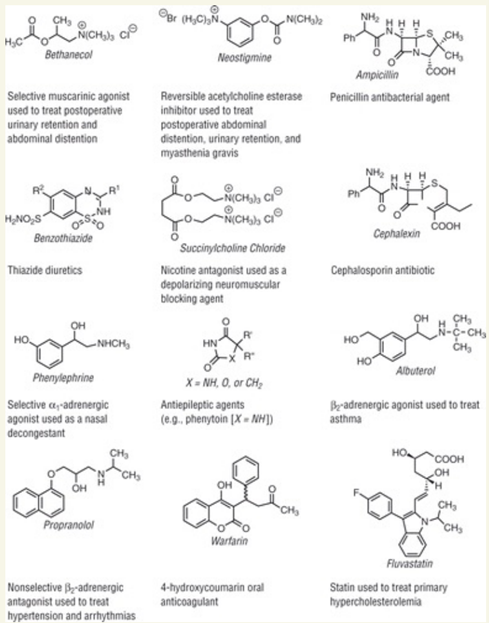
Warfarin เป็นยาที่ใช้เป็นยาลดการและมักถูกใช้ในการป้องกันการเกิดลิ่มเลือด. ส่วนตัวเลือกที่เหลือ (Cephalexin, Neostigmine, Benzothiazide) เป็นยาที่มักถูกใช้ในการรักษาโรคที่เกี่ยวกับระบบปัสสาวะหรือกล้ามเนื้อทางเดินปัสสาวะ.
|
Warfarin (วาฟาริน) เป็นยาในกลุ่มต้านการแข็งตัวของเลือดหรือที่เรียกกันว่ายาละลายลิ่มเลือด โดยแพทย์จะใช้ยานี้ในหลาย ๆ จุดประสงค์ เช่น ใช้รักษาหรือป้องกันภาวะเลือดอุดตันในหลอดเลือดดำหรือหลอดเลือดแดง รักษาหรือป้องกันโรคลิ่มเลือดอุดกั้นในปอด หรือใช้เพื่อลดความเสี่ยงต่อการโรคหลอดเลือดสมองหรือโรคหัวใจ
|
7 |
-.50
-.25
+.25
เต็ม
0
-35%
+30%
+35%
|
| 2 |
|
2. Warfarin |
|
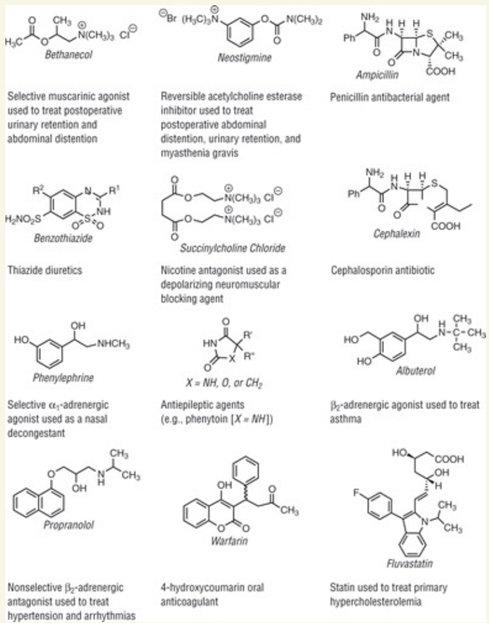
เนื่องจากไม่มี n เป็นองค์ประกอบซึ่งแตกกต่างจากตัวอื่น
|
โมเลกุล Warfarin, C19H16O4 Warfarin เป็นยาต้านการแข็งตัวของเลือดที่ใช้กันตามปกติเพื่อป้องกันการเกิดลิ่มเ
|
7 |
-.50
-.25
+.25
เต็ม
0
-35%
+30%
+35%
|
| 3 |

|
3. Neostigmine |
|
Neostigmineไม่ใช่ลักษณะโมเลกุลแบบ Extension แต่เป็น โมเลกุลแบบ Quaternary Ammonium.
|
|
7 |
-.50
-.25
+.25
เต็ม
0
-35%
+30%
+35%
|
| 4 |

|
1. จับกับตำแหน่งน้อย |
|
|
|
7 |
-.50
-.25
+.25
เต็ม
0
-35%
+30%
+35%
|
| 5 |
จาก Engineered brain-targeted drug delivery systems ที่ใช้คืออะไร
|
4. ถูกมากกว่า 1 ข้อ |
|
Engineered brain-targeted drug delivery systems ที่ใช้คือ DOX In Liposomes และ DEX Liposomes
|
|
7 |
-.50
-.25
+.25
เต็ม
0
-35%
+30%
+35%
|
| 6 |
ข้อใดเกี่ยวข้องกับ Environmental toxicology
|
5. ถูกมากกว่า 1 ข้อ |
|
ทั้งหมดเกี่ยวข้องกับ Environmental toxicology:
1. Pesticide Dichlorodiphenyltrichloroethane (DDT)
2. Industrial Chemicals
3. PCBs (Polychlorinated Biphenyls)
4. PFAS (Per- and polyfluoroalkyl substances)
|
Environmental Toxicology is an international journal providing a forum for academics to discuss the toxicity and toxicology of environmental pollutants. We investigate the substances affecting our air, dust, sediment, soil and water, covering ecotoxicity, soil contamination, air & water pollution, endocrine disruption, immunotoxicity, & more.
Our journal aims to improve all species lives on Earth. We consider natural toxins and their impacts as well as the impacts of anthropogenic chemicals. These topics are studied in relation to public health and environmental policies that keep us safe.
|
7 |
-.50
-.25
+.25
เต็ม
0
-35%
+30%
+35%
|
| 7 |
ข้อใดไม่ได้อธิบายสมมติฐาน Life on the Edge ที่เกี่ยวข้องกับโรคอะไมลอยด์
|
2. การคัดเลือกโดยธรรมชาติ |
|
|
|
7 |
-.50
-.25
+.25
เต็ม
0
-35%
+30%
+35%
|
| 8 |
ข้อใดไม่เกี่ยวข้องกับการขาดกลูโคส -6- ฟอสเฟต G6PD?
|
4. ความเครียด |
|
การขาดกลูโคส-6-ฟอสเฟต G6PD เป็นภาวะที่เกิดจากขาดแคลนของเอนไซม์กลูโคส-6-ฟอสเฟตดีไฮโดรเจนาส์ (G6PD) ซึ่งมีผลในการทำให้เม็ดเลือดแดงทำงานผิดปกติ โดยส่วนใหญ่ไม่มีอาการทันที แต่สามารถเกิดอาการหลังการบังคับให้ร่างกายเผชิญกับตัวต้นตรงที่ทำให้เกิดความเครียดในเซลล์เลือดแดง เช่น การติดเชื้อ, การบริโภคอาหารหรือยาที่ส่งผลต่อ G6PD และสภาพแวดล้อมที่เปลี่ยนแปลง อาการสามารถรวมถึง hemolytic anemia (ลมชักเลือด), jaundice (โรคตา), และ dark urine (ปัสสาวะเข้มสี).
|
|
7 |
-.50
-.25
+.25
เต็ม
0
-35%
+30%
+35%
|
| 9 |
ข้อใดไม่ใช่กลไกการออกฤทธิ์ของ Gleevac
|
3. ช่วยให้เซลล์เนื้องอกแพร่กระจาย |
|
Gleevac (imatinib) มีกลไกการออกฤทธิ์โดยการยับยั้งโปรตีนที่เรียกว่า tyrosine kinase ในเซลล์ที่มีการเปลี่ยนแปลงในการสร้างเม็ดเลือดขาวแบบได้รับการควบคุม (myeloid white blood cells) ที่เกิดขึ้นในบาดแผล CML (chronic myeloid leukemia) หรือมะเร็งเม็ดเลือดขาวแบบโรคเรื้อรัง. การยับยั้ง tyrosine kinase นี้ช่วยลดการเจริญเติบโตของเซลล์มะเร็งและควบคุมโรคได้ในบางกรณี
|
|
7 |
-.50
-.25
+.25
เต็ม
0
-35%
+30%
+35%
|
| 10 |
เป็นเรื่องปกติที่จะให้ยา Warfarin ในขนาดเริ่มต้นที่แตกต่างกันกับผู้คนตามเชื้อชาติของพวกเขา หากให้น้อยเกินไปจะเกิดอะไรขึ้น
|
2. ทำให้เลือดออกมากเกินไป |
|
การให้ Warfarin ในขนาดเริ่มต้นที่ไม่เหมือนกันสามารถทำให้เลือด “บาง” หรือลดการแข็งตัวของเลือดมากเกินไป ซึ่งอาจทำให้เกิดการไหลเวียนเลือดมากเกินไปและเพิ่มความเสี่ยงในการเกิดเลือดออกมากเกินไป (hemorrhage)
|
|
7 |
-.50
-.25
+.25
เต็ม
0
-35%
+30%
+35%
|
| 11 |
การกลายพันธุ์ของยีนใดที่อาจส่งผลต่อระดับ Warfarin
|
2. CYP2C6 gene. |
|
CYP2C6 gene เป็นหนึ่งในยีนที่มีผลต่อการตีรีบวนซิล Warfarin ในร่างกาย การหลีกเลี่ยงปัจจัยที่ส่งผลต่อการยับยั้งเอนไซม์ CYP2C6 สามารถช่วยปรับขนาดการให้ยา Warfarin ให้เหมาะสมกับความต้องการของแต่ละบุคคล
|
|
7 |
-.50
-.25
+.25
เต็ม
0
-35%
+30%
+35%
|
| 12 |
Drug Concentrations
Exponential functions can be used to model the concentration of a drug in a patient’s body. Suppose the concentration of Drug X in a patient’s bloodstream is modeled by,
C (t) = Co e^(-rt),
จงหาสมการที่เป็นไปได้ หากยา x, มี r =0. 09 แล้วมีความเข้มข้นลดลง 80% จาก the model, C(t) = Co e^(-rt)
|
3. In 0.8 = -0.09t |
|
เราสามารถหาค่า t จากสมการ C(t) = Co e^(-rt) ที่กำหนดให้ C(t) เป็น 0.8 (ลดลง 80%) และ r เป็น 0.09
|
How to use the C(t) = Co e ^(-rt) formula?
Here is some background information
Exponential functions can be used to model the concentration of a drug in a patient's body. Suppose the concentration of Drug X in a patient's bloodstream is modeled by,
C (t) = C0 e - rt,
where C (t) represents the concentration at time t (in hours), C0 is the concentration of the drug in the blood immediately after injection, and r > 0 is a constant indicating the removal of the drug by the body through metabolism and/or excretion. The rate constant r has units of 1/time (1/hr). It is important to note that this model assumes that the blood concentration of the drug (C0 ) peaks immediately when the drug is injected.
the problem says
Round your answer to the nearest tenth and use the model C(t) = Co e^(-rt). If for drug x, r = 0.20 1/hr
a) how long after injection does it take for the concentration of a drug x to decrease to 35% of the initial level?
b) what can be said about the drug concentration in the body and the removal rate for this scenario. Use units of measure.
Any help would be really appreciated. I am very stuck on this problem
|
7 |
-.50
-.25
+.25
เต็ม
0
-35%
+30%
+35%
|
| 13 |
Drug Concentrations Exponential functions can be used to model the concentration of a drug in a patient’s body. Suppose the concentration of Drug X in a patient’s bloodstream is modeled by, C (t) = C0 e^(-rt),
จงหาค่า r ถ้า Initial concentration = 10 mg/L
3 mg/L is shown after 9 hours.
|
2. 0.18 |
|
ให้ใช้ข้อมูลที่ให้มาแทนในสมการ (C(t) = C_0 e^{-rt}):
|
How to use the C(t) = Co e ^(-rt) formula?
Here is some background information
Exponential functions can be used to model the concentration of a drug in a patient's body. Suppose the concentration of Drug X in a patient's bloodstream is modeled by,
C (t) = C0 e - rt,
where C (t) represents the concentration at time t (in hours), C0 is the concentration of the drug in the blood immediately after injection, and r > 0 is a constant indicating the removal of the drug by the body through metabolism and/or excretion. The rate constant r has units of 1/time (1/hr). It is important to note that this model assumes that the blood concentration of the drug (C0 ) peaks immediately when the drug is injected.
the problem says
Round your answer to the nearest tenth and use the model C(t) = Co e^(-rt). If for drug x, r = 0.20 1/hr
a) how long after injection does it take for the concentration of a drug x to decrease to 35% of the initial level?
b) what can be said about the drug concentration in the body and the removal rate for this scenario. Use units of measure.
Any help would be really appreciated. I am very stuck on this problem
|
7 |
-.50
-.25
+.25
เต็ม
0
-35%
+30%
+35%
|
| 14 |
Drug Concentrations
Exponential functions can be used to model the concentration of a drug in a patient’s body. Suppose the concentration of Drug X in a patient’s bloodstream is modeled by,
C (t) = C0 e^(-rt),
ถ้า r = 0.041 /hr
Co = 9 mg/L
t = 7
จากสมการจงหาความเข้มข้นของยา ณ เวลาที่ฉีด
|
3. 0.99 mg/L |
|
C (t) = C0 e^(-rt)
• Co = 9 mg/L (initial concentration)
• r = 0.041 /hr (decay rate)
• L t = 7 hours
|
How to use the C(t) = Co e ^(-rt) formula?
Here is some background information
Exponential functions can be used to model the concentration of a drug in a patient's body. Suppose the concentration of Drug X in a patient's bloodstream is modeled by,
C (t) = C0 e - rt,
where C (t) represents the concentration at time t (in hours), C0 is the concentration of the drug in the blood immediately after injection, and r > 0 is a constant indicating the removal of the drug by the body through metabolism and/or excretion. The rate constant r has units of 1/time (1/hr). It is important to note that this model assumes that the blood concentration of the drug (C0 ) peaks immediately when the drug is injected.
the problem says
Round your answer to the nearest tenth and use the model C(t) = Co e^(-rt). If for drug x, r = 0.20 1/hr
a) how long after injection does it take for the concentration of a drug x to decrease to 35% of the initial level?
b) what can be said about the drug concentration in the body and the removal rate for this scenario. Use units of measure.
Any help would be really appreciated. I am very stuck on this problem
|
7 |
-.50
-.25
+.25
เต็ม
0
-35%
+30%
+35%
|
| 15 |
ข้อใดมีผลต่อ Aβ-dependent tau phosphorylation
|
4. สารตะกั่ว |
|
สารตะกั่ว (Tau phosphorylation) เป็นกระบวนการที่สำคัญในทางเซลล์ที่เกี่ยวข้องกับโรคที่มีการสะสมของ Aβ (Amyloid-beta) เช่นโรคอัลไซเมอร์และภาวะสมองเสื่อม.
|
Tau is a microtubule (MT)-binding protein, and tau phosphorylation at multiple sites controls its binding to MTs 15. The identified phosphorylation sites are located in the N-terminal region (Ser46 16, Thr123 17, Ser198, Ser199, Ser202, Ser208, Ser210, Thr212, Ser214, Thr217, Thr231, and Ser235), the repeat region (Ser262 and Ser356), and the C-terminal region (Ser396, Ser400, Thr403, Ser404, Ser409, Ser412, Ser413, and Ser422 18) (Figure (Figure1).1). These sites are phosphorylated by several enzymes, including A-kinase, C-kinase, cyclin-dependent kinase-5 (CDK-5), CaM kinase II, glycogen synthase kinase-3β (GSK-3β) and MAPKs 12, 19 (Table (Table1).1). Under pathological conditions, these kinases contribute to the hyperphosphorylation of tau protein, which subsequently leads to the dissociation of tau protein from MTs and the formation of NFTs 20, 21. Hyperphosphorylated tau protein results in abnormal increases in cytoskeletal proteins, axoplasmic transport disorders and neuronal degeneration 22. Tau hyperphosphorylation is the product of deregulated Ser/Thr kinases, such as CDK-5 and GSK-3β 23. Tau protein is prephosphorylated by A-kinase, C-kinase, CDK-5, and CaM kinase II and subsequently phosphorylated by GSK-3β. Ser262/Ser356 is first prephosphorylated by CDK-5, CaM kinase II and C-kinase, and this prephosphorylation makes it more accessible to GSK-3β for further phosphorylation 24. The prephosphorylation of Ser262/Ser356 may cause tau to assume a more favourable conformation such that Thr231, Ser235, Ser396, Ser404 19, 24 and other sites may be rapidly recognized by GSK-3β in the subsequent phosphorylation step 25. Aβ accelerates the hyperphosphorylation of tau by mediating the activation of CDK-5 23 and GSK-3β 26. GSK-3β, which is inextricably related to Aβ, is an important factor in the phosphorylation of tau, and it aggravates tau-induced neurotoxicity 15, 27 (Table (Table1).1). Tau phosphorylation at Ser262 is equally critical for Aβ42-induced tau toxicity 11. In conclusion, aggregated Aβ induces tau hyperphosphorylation by enhancing the activity of GSK-3β and CDK-5, which are involved in the phosphorylation of tau at multiple Ser/Thr sites 28 (Figure (Figure1).1). Hyperphosphorylated tau protein detaches from MTs and is more likely to form NFTs 23, 27, 30, which causes neurofibrillary degeneration. Therefore, CDK-5 and GSK-3β kinase inhibitors may help inhibit Aβ-mediated tau hyperphosphorylation. For example, inhibitors of GSK-3β and CDK-5, such as lithium, AZD1080 and roscovitine, significantly lowered the levels of tau phosphorylation and significantly reduced the levels of aggregated, insoluble tau 31-33. However, their clinical efficacy has not been established 34. This result further suggests that proteins other than Aβ act on tau hyperphosphorylation or phosphorylation caused by kinases other than CDK-5 and GSK-3β, that Aβ is not the only protein that activates CDK-5 and GSK-3β, and that other tau phosphorylation sites should be further explored. Further studies have demonstrated that mitogen-activated protein kinases (MAPKs) and GSK-3β were involved in the formation of PHF-tau in the AD brains 35-37. Similarly, Aβ-induced tau phosphorylation in neurons is mediated via activation of both MAPK and GSK-3β 12, 36-38. MAPKs, including ERK1/2, SAPKs and p38, are activated by tyrosine phosphorylation and are involved in the phosphorylation of tau in AD 36-38. Therefore, further exploration is needed to develop new drugs that act at different specific phosphorylation sites of tau via various mechanisms.
|
7 |
-.50
-.25
+.25
เต็ม
0
-35%
+30%
+35%
|
| 16 |
ความเข้มข้นของยาในกระแสเลือดของผู้ป่วยหลังจาก t ชั่วโมง จำลองตามสูตร C (t) = 5(0.5)^t โดยที่ C วัดเป็นมิลลิกรัมต่อลิตร ต้องใช้เวลานานเท่าใดที่ความเข้มข้นจะลดลงถึง 70% ของระดับเริ่มต้น
|
3. 8.1 hr. |
|
ในสูตร (C(t) = 5(0.5)^t), ความเข้มข้นลดลงถึง 70% ของระดับเริ่มต้น เมื่อ เป็น 8.1 ชั่วโมง
|
|
5 |
-.50
-.25
+.25
เต็ม
0
-35%
+30%
+35%
|
| 17 |
ข้อความใดต่อไปนี้ถูกต้องเกี่ยวกับอันตรกิริยาการจับที่เป็นไปได้ของเอไมด์ทุติยภูมิ
|
3. สามารถมีส่วนร่วมในพันธะไฮโดรเจนได้ทั้งในฐานะผู้ให้พันธะไฮโดรเจนและตัวรับพันธะไฮโดรเจน |
|
|
|
7 |
-.50
-.25
+.25
เต็ม
0
-35%
+30%
+35%
|
| 18 |
ข้อใดเกี่ยวข้องกับ Plasma measures of GFAP
|
2. CSF levels |
|
เนื่องจาก GFAP (Glial Fibrillary Acidic Protein) มักถูกวัดในน้ำหล่อเลือดสมอง (CSF - Cerebrospinal Fluid) เพื่อประเมินสถานะทางสมองในบางกรณี เช่น การตรวจสอบความเป็นไปได้ของการบาดเจ็บสมองหรือโรคสมองต่าง ๆ
|
|
7 |
-.50
-.25
+.25
เต็ม
0
-35%
+30%
+35%
|
| 19 |
ความเข้มข้นของยาในกระแสเลือดของผู้ป่วยหลังจาก t ชั่วโมง จำลองตามสูตร C (t) = 5(8)^t โดยที่ C วัดเป็นมิลลิกรัมต่อลิตร ความเข้มข้นของยาจะเป็น 80 มิลลิกรัมต่อลิตร ที่กี่ชั่วโมง
|
2. 1.45 |
|
ให้ตัวแปร C(t) เท่ากับ 80 (ความเข้มข้นที่ต้องการ) และแทนลงในสูตร:5(8)^t=80
|
|
7 |
-.50
-.25
+.25
เต็ม
0
-35%
+30%
+35%
|
| 20 |
การจับยากับตำแหน่งจับของโปรตีน Disulfide bond ไม่เกี่ยวข้องกับโรคใด
|
5. ผิดมากกว่า 1 ข้อ |
|
การจับยากับตำแหน่งจับของโปรตีน disulfide bond ไม่เกี่ยวข้องกับโรคใด โปรตีน disulfide bond เป็นลักษณะโครงสร้างที่เกิดจากการเชื่อมโยงทางเคมีของกำมะถัน (sulfur-sulfur) ซึ่งมักเกิดในโมเลกุลโปรตีน แต่ไม่มีความเชื่อมโยงกับโรคที่ระบุ
|
|
7 |
-.50
-.25
+.25
เต็ม
0
-35%
+30%
+35%
|