Oral Presentations
สื่อสารปัญหา แนวคิด และหลักฐานผ่านการนำเสนอ

04–08 FEB 2026THAILAND × SOUTH KOREA
สำรวจทำเนียบผลงาน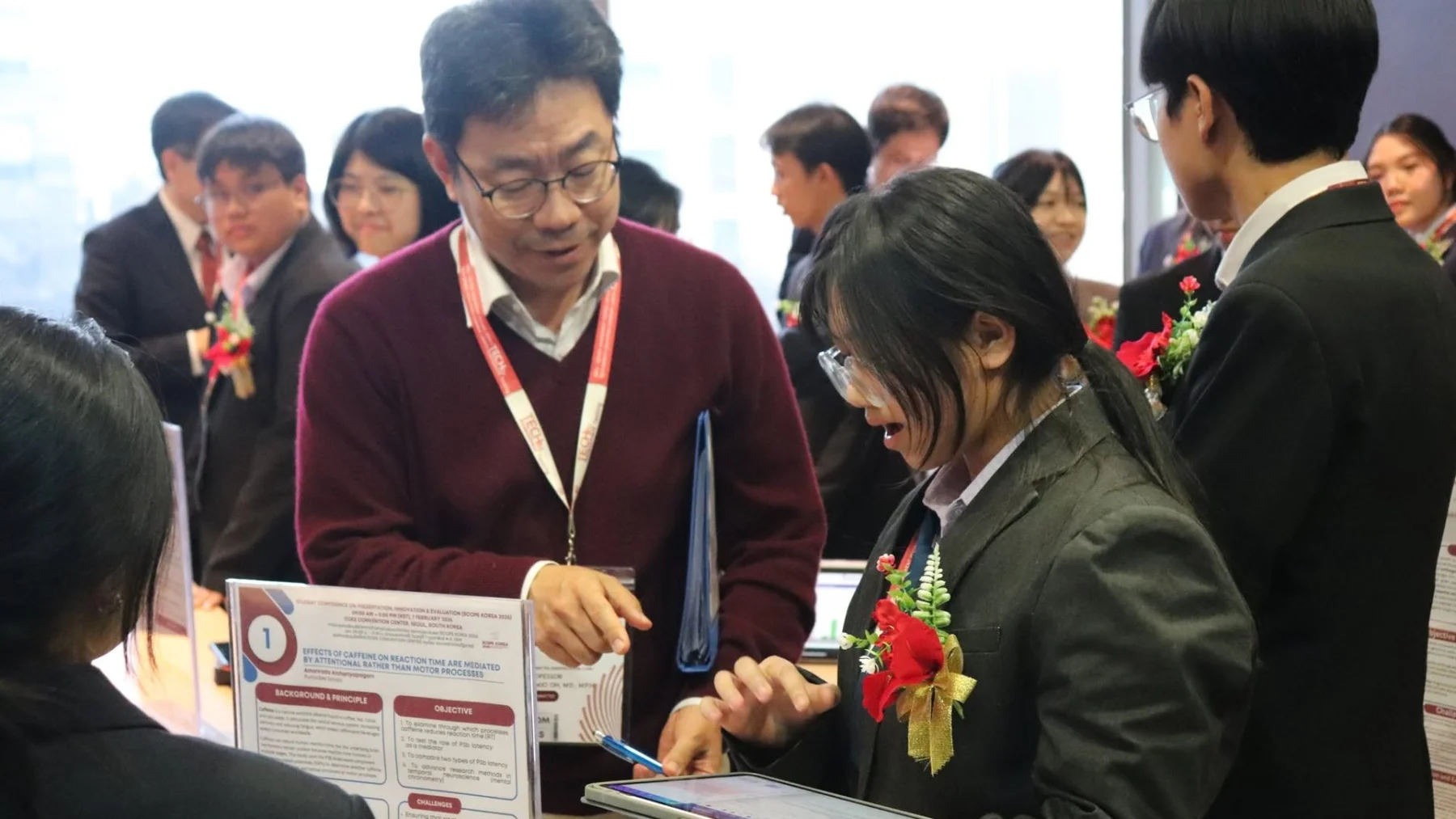
จากคำถามที่สนใจ สู่การอธิบายแนวคิดและหลักฐานต่อผู้ประเมิน สำรวจทำเนียบ SCOPE KOREA รุ่นที่ 2 เดือนกุมภาพันธ์ 2569
นับจากรายการที่เผยแพร่ในทำเนียบรุ่นนี้
การประชุมวิชาการนักเรียนว่าด้วยการนำเสนอผลงาน นวัตกรรม และการประเมินผล (ไทย–เกาหลีใต้)
2026 스코프 코리아(SCOPE KOREA) 학생 학술발표 및 혁신역량 평가대회
สื่อสารปัญหา แนวคิด และหลักฐานผ่านการนำเสนอ
จัดโครงสร้างผลงานเพื่ออธิบายและแลกเปลี่ยน
ฝึกตอบคำถามและรับมุมมองจากผู้ทรงคุณวุฒิ
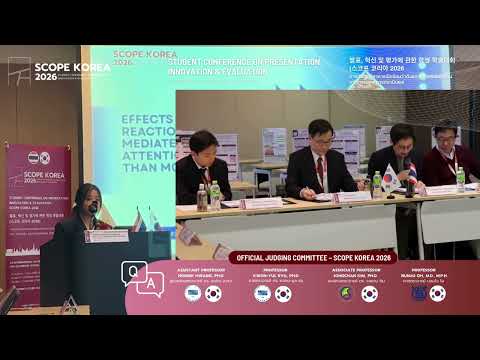
Effects of caffeine on reaction time are mediated by attentional rather than motor processes — MISS AMONRADA ATCHARIYAPAGORN
Punjadee School · SCOPE KOREA GEN 02
ค้นหาชื่อผลงาน ผู้เรียน หรือโรงเรียน แล้วเปิดอ่านรายละเอียดและชมคลิปของแต่ละคน
แสดง 8 / 18 รายการผลงาน
คณะกรรมการผู้ทรงคุณวุฒิที่ระบุในทำเนียบโครงการ พร้อมตำแหน่งวิชาการ ประวัติ และความเชี่ยวชาญ
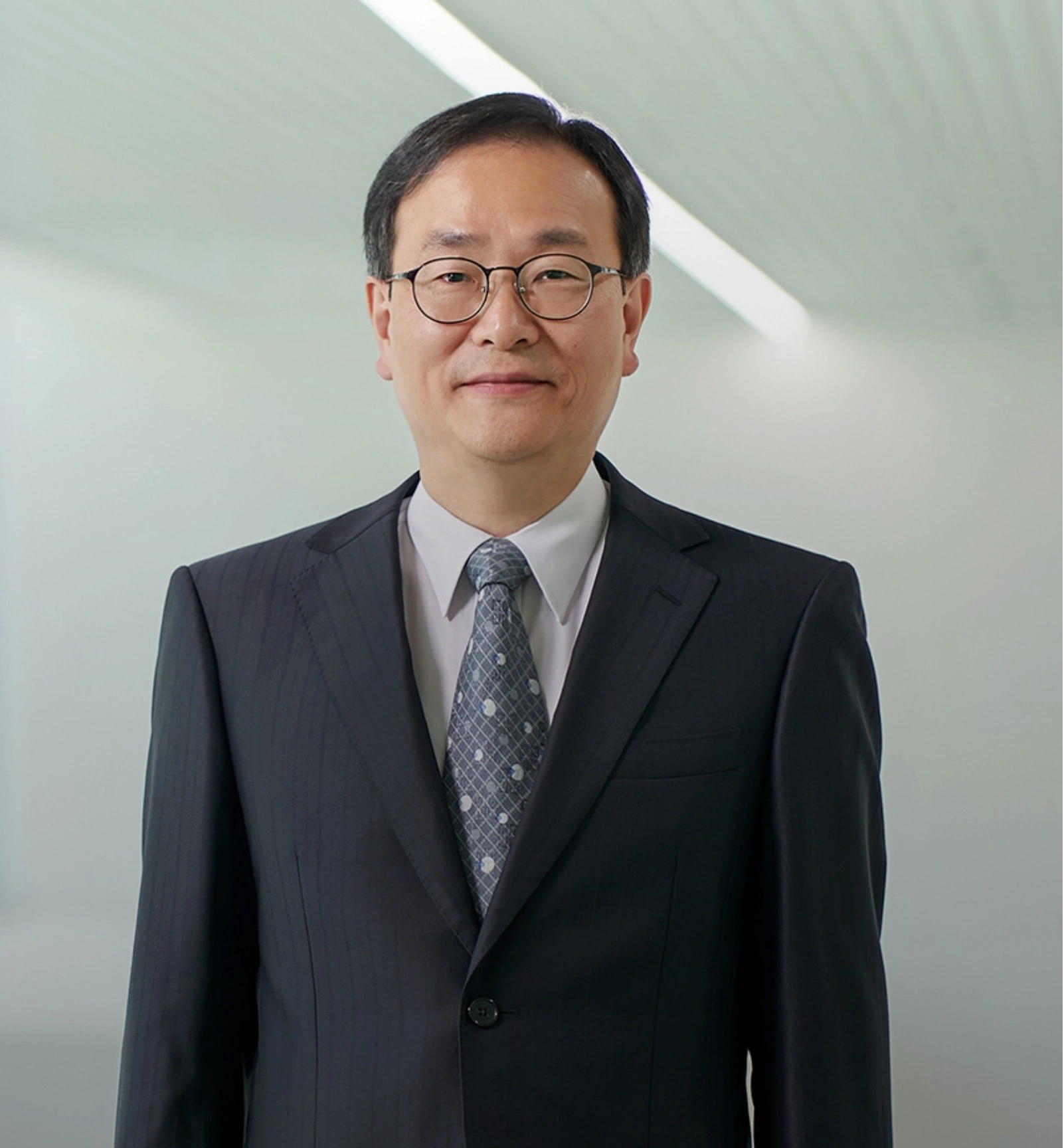 ศาสตราจารย์
University of Seoul
ชีวเคมีและประสาทวิทยาศาสตร์จากงานวิจัยที่ Stanford สู่การศึกษาว่าสมองดูแลและกำจัดโปรตีนอย่างไร เพื่อทำความเข้าใจความเสื่อมของเซลล์ประสาท
การศึกษาและประสบการณ์ระบบกำจัดโปรตีนในเซลล์ · Autophagy · Astrocytes · กลไกการปกป้องเซลล์ประสาท
ประวัติจากสถาบัน ศาสตราจารย์
Seoul National University
เวชศาสตร์ครอบครัวและสุขภาพประชากรมุมมองจากแพทย์และนักวิจัยด้านเวชศาสตร์ครอบครัว เชื่อมการดูแลผู้ป่วย การคัดกรองโรค และหลักฐานด้านสุขภาพในประชากร
การศึกษาและประสบการณ์การคัดกรองสุขภาพ · การตรวจพบโรคเรื้อรัง · โภชนาการและสุขภาพจิต · สุขภาพผู้สูงอายุ
ประวัติจากสถาบัน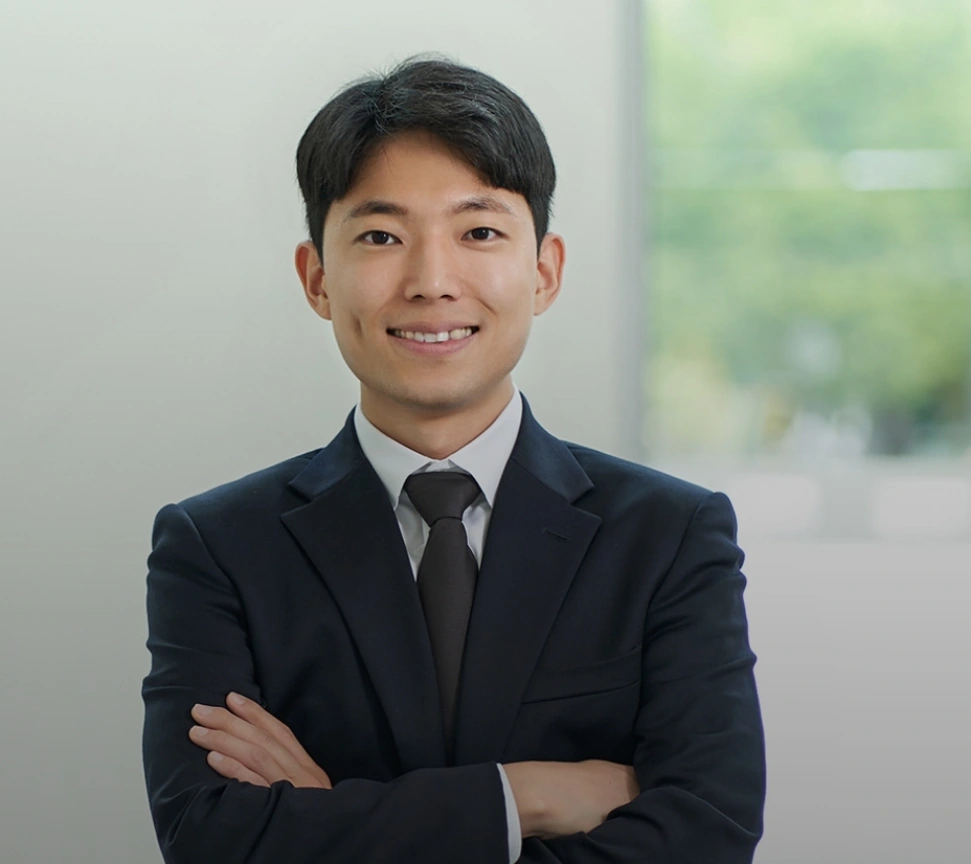 ผู้ช่วยศาสตราจารย์
University of Seoul
กลไกสมอง การเรียนรู้ และความจำปริญญาเอกจาก MIT พร้อมพื้นฐานการวิจัยว่าการเชื่อมต่อระหว่างเซลล์ประสาทเปลี่ยนแปลงอย่างไร เมื่อมนุษย์เรียนรู้และจดจำ
การศึกษาและประสบการณ์Synaptic plasticity · กลไกระดับโมเลกุลของการเรียนรู้และความจำ
ประวัติจากสถาบัน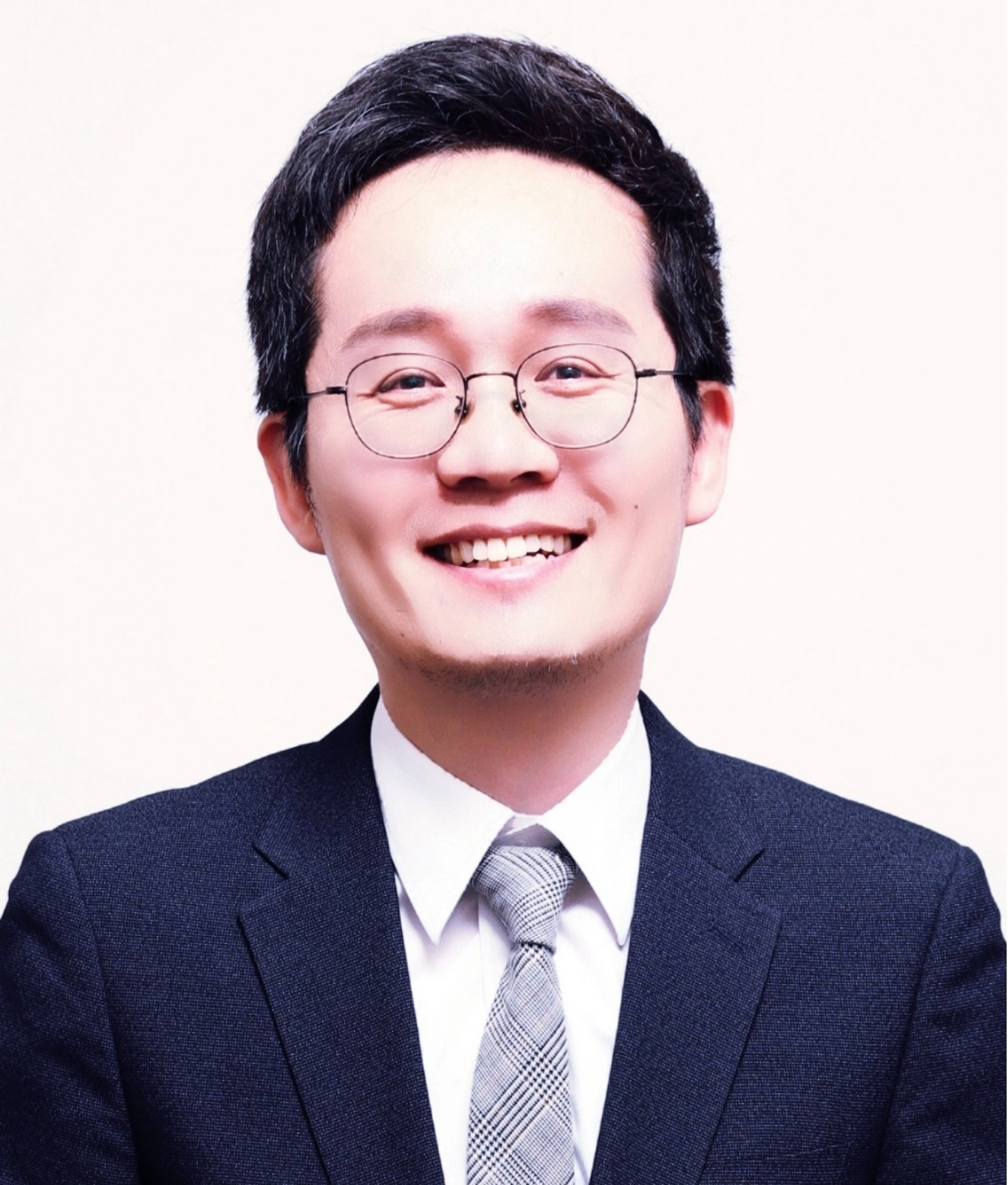 รองศาสตราจารย์
Sogang University
ชีววิทยามะเร็งและการวิจัยระดับโมเลกุลประสบการณ์วิจัยจาก UT MD Anderson Cancer Center และ Vanderbilt สู่การศึกษาชีววิทยามะเร็ง กลไกเนื้องอก และ non-coding RNA
การศึกษาและประสบการณ์Cancer biology · Non-coding RNA · มะเร็งต่อมลูกหมาก · กลไกการเกิดเนื้องอก
ประวัติจากสถาบันรายชื่อจากทำเนียบโครงการ · คณะกรรมการแต่ละรอบให้ยึดประกาศของรอบนั้น
ภาพจากทำเนียบ SCOPE KOREA GEN 02 · กดภาพเพื่อขยาย
รู้จักรูปแบบการนำเสนอ แผนศึกษาดูงาน และรายละเอียดของรอบใหม่ ก่อนตัดสินใจสมัคร
ข้อมูลต้นฉบับอาจมีวันและเงื่อนไขของรอบที่ผ่านมา โปรดใช้รายละเอียดของรอบที่สมัครและประกาศใน TechEd Testing เป็นหลัก
การประชุมวิชาการนักเรียนว่าด้วยการนำเสนอผลงาน นวัตกรรม และการประเมินผล (ไทย-เกาหลีใต้) ปี 2025 - 2026 발표, 혁신 및 평가에 관한 학생 학술대회 (스코프 코리아 2025 - 2026)รวบรวมผลงานของนักเรียนที่ได้รับคัดเลือกให้นำเสนอผลงานทางวิชาการและนวัตกรรมในโครงการ SCOPE KOREA
อดีตรองคณบดีคณะวิทยาศาสตร์ชีวภาพ และอดีตหัวหน้าภาควิชาวิทยาศาสตร์ชีวภาพ มหาวิทยาลัยโซล (University of Seoul, South Korea) ผู้เชี่ยวชาญด้านชีวเคมี (Biochemistry) และวิทยาศาสตร์ประสาท (Neuroscience) มีผลงานวิจัยตีพิมพ์มากกว่า 20 ปี ในวารสารชั้นนำระดับโลก
ภาควิชาเวชศาสตร์ มหาวิทยาลัยแห่งชาติโซล (Seoul National University, สาธารณรัฐเกาหลี) ผู้ทรงคุณวุฒิและอาจารย์แพทย์ โรงพยาบาล SMG-SNU Boramae Medical Center สาธารณรัฐเกาหลีมีผลงานวิจัยตีพิมพ์มากมายในวารสารชั้นนำระดับโลก
ภาควิชาวิทยาศาสตร์ชีวภาพ มหาวิทยาลัยโซล (University of Seoul, South Korea) ผู้เชี่ยวชาญวิศวกรรมศาสตร์และด้านประสาทวิทยาศาสตร์ (Neuroscience) การทำงานของสมอง ระบบการเรียนรู้ ความจำ และความผิดปกติทางจิตเวช จบปริญญาเอกจาก Massachusetts Institute of Technology (MIT, USA) มีผลงานวิจัยตีพิมพ์มากมายในวารสารชั้นนำระดับโลก
ภาควิชาวิทยาศาสตร์ชีวภาพ มหาวิทยาลัยโซกัง (Sogang University, South Korea) ผู้เชี่ยวชาญด้านมะเร็งวิทยา (Cancer Biology) มะเร็งต่อมลูกหมาก กลไกการเกิดเนื้องอก และงานวิจัย non-coding RNA มีผลงานวิจัยร่วมกับศูนย์มะเร็งชั้นนำของโลก อาทิ MD Anderson Cancer Center (USA) สถาบันมะเร็งอันดับ 2 ของโลก
Discover student innovations, academic ideas, and presentations from previous generations of SCOPE KOREA. สำรวจผลงาน แนวคิด และการนำเสนอทางวิชาการของนักเรียนไทยจาก SCOPE KOREA รุ่นที่ผ่านมา
Student Conference on Presentation, Innovation & Evaluation (SCOPE KOREA 2026) ณ ศูนย์ประชุมและการจัดนิทรรศการโคเอ็กซ์ กรุงโซล สาธารณรัฐเกาหลี เมื่อวันเสาร์ที่ 7 กุมภาพันธ์ 2569
01 | GEN 02 · FEBUARY 2026
MISS AMONRADA ATCHARIYAPAGORN
Punjadee School
Background & Principle
Objective
To identify the specific processes through which caffeine reduces reaction time (RT).
To test the role of P3b latency as a mediator in this effect.
To compare different types of P3b latencies.
To advance research methodologies in temporal neuroscience (mental chronometry)
Conclusion and Expected Impact
The study concludes that caffeine reduces reaction time primarily by enhancing perceptual and attentional processes, with stimulus-locked P3b latency serving as a key mediator. The motor processes contribute significantly less to this effect. The mediation framework employed here provides a valuable approach for future psychopharmacological research, offering more precise insights than traditional averaged ERP methods
02 | GEN 02 · FEBUARY 2026
MISS CHATCHA SUDSART
Pramandanijjanukroah School
Background & Principle
Objective
To help elderly users walk more steadily and maintain proper posture.
To detect and alert users when incorrect or stooped posture occurs.
To reduce the risk of falls and long-term back pain.
To develop a user-friendly and cost-effective assistive device for elderly individuals
Conclusion and Expected Impact
The smart cane developed in this project demonstrates the effective integration of sensor technology into a traditional walking aid. By monitoring posture and providing real-time alerts, the system helps elderly users maintain proper walking posture and improve stability. The expected impact includes reduced back pain, fewer falls, increased confidence during walking, safer mobility, greater independence, and an improved quality of life for elderly individuals
03 | GEN 02 · FEBUARY 2026
MR. CHIRASAK SUWANRIT
Phuket Thaihua ASEAN Wittaya School
Background & Principle
Objective
To design and synthesize an antifungal biopath derived from agricultural waste integrated with garlic extract.
To evaluate the potential antifungal activity against Trichophyton rubrum and Candida albicans and analyze physical properties and drug release efficiency.
To enhance the value of agricultural waste by proposing a sustainable and safer alternative for treating fungal skin infections
Conclusion and Expected Impact
The proposed biopatch is expected to exhibit strong antifungal potential, offering a safer and more sustainable alternative for dermatological applications. By integrating natural biopolymers with phytochemical-based drug delivery systems, the project highlights the potential of agricultural waste to be repurposed into high-value medical innovations. Ultimately, it aims to reduce reliance on synthetic chemicals, promote eco-friendly materials, and support future advancements in public health and environmental sustainability
04 | GEN 02 · FEBUARY 2026
MR. EKKARACH CHOMDEJ
The Newton Sixth Form School
Background & Principle
Objective
Detects abnormal brain signals in advance, reducing the risk of severe complications.
Supports continuous and personalized brain health management.
Promotes research and innovation in brain health.
Establishes a new standard for using technology to enhance quality of life
Conclusion and Expected Impact
The Global Brainwave Network enables real-time brainwave detection and visualization, providing users with an intuitive interface to view their stress and focus levels. This system establishes a new standard for preventive brain healthcare, empowering individuals and contributing to global neurological research
05 | GEN 02 · FEBUARY 2026
MISS JAERIN CHO
The Newton Sixth Form School
Background & Principle
Objective
Break itch-scratch cycle to reduce flare severity.
Deliver soothing oat actives directly to affected skin.
Strengthen skin barrier and calming itch nerves.
Improve daily comfort and quality life.
Reduce reliance on topical treatment.
Provide a safe, non-invasive option
Conclusion and Expected Impact
Aventhera™ introduces a triple-action approach to eczema itch relief which combines oat-based microneedle therapy, surface soothing, and an anti-itch layer. Aventhera™ aims to reduce the itch-scratch cycle and support skin barrier recovery which is expected to improve daily comfort, sleep quality, and quality of life
06 | GEN 02 · FEBUARY 2026
MASTER NUTTAKIT MUANGSONG
Prince Royal’s College (PRC)
Background & Principle
Objective
To provide fast screening for leukemia.
To increase screening accuracy for leukemia.
To make leukemia screening available anywhere
Conclusion and Expected Impact
Experiments to determine which artificial intelligence system provides the fastest, most accurate, and precise image processing conclude that the AI YOLO v.8 and the OpenCV algorithm are effective models for screening leukemia
07 | GEN 02 · FEBUARY 2026
MR. PAPANGKORN HONGPHANG
Udon Pittayanukoon School
Background & Principle
Objective
To propose the application of HTC to recycle agricultural residues within Thailand.
To reduce GHG emission from open burning of agricultural residues.
To explore the potential uses of hydrochar within Thailand
Conclusion and Expected Impact
Hydrothermal Carbonisation has strong potential as a pathway to reduce greenhouse gas emissions from agricultural residue burning in Thailand. By processing wet crop residues into hydrochar, HTC avoids emissions from open burning while turning organic carbon into a reusable form for energy or agricultural systems. If deployed efficiently, Thailand’s greenhouse gas emissions could be reduced effectively, improving air quality and promoting a circular bioeconomy within the agricultural sector
08 | GEN 02 · FEBUARY 2026
MISS PARIMA LUECHACHANWIT
Ongkharak Demonstration School
Background & Principle
Objective
To develop a real-time air monitoring system for organophosphate exposure by integrating AChE-based biosensing with health risk assessment.
To enable proactive medical preventions prior to clinical disease onset
Conclusion and Expected Impact
AeroGuard OPs creates a verifiable safety standard through autonomous sensing and destruction. Its expected impact prevents neurotoxic exposure, providing an intelligent shield for both workers and residents
09 | GEN 02 · FEBUARY 2026
MR. PATSAKORN SAGUNASING
Debsirin School
Background & Principle
Rapid expansion in the private and industrial sectors has led to water pollution, which significantly impacts humans, aquatic animals, and aquatic plants.
Wastewater contains organic and inorganic substances that hinder photosynthesis and obstruct the diffusion of oxygen from the air into the water.
This affects the survival of aquatic life and humans, prompting the study and testing of various mechanical devices to replenish oxygen in water sources
Objective
To develop a mechanical oxygenation device capable of restoring oxygen levels in polluted and deteriorated water bodies.
To create an innovative solution for oxygenating inland water sources.
To treat wastewater in both small-scale and large-scale water bodies.
To reduce methane gas emissions, which contribute to global warming.
To address water pollution and unpleasant odors, thereby improving environmental conditions and enhancing the quality of life for communities and society.
To utilize solar panels to convert solar energy into electrical energy for oxygenation in water sources
Conclusion and Expected Impact
The device consists of six equal sides, each 15 cm in length, with internal angles of 120 degrees, a distance of 50 cm between the hexagonal faces, and circular holes with a diameter of 0.5 cm providing a total water-contact surface area of 0.55 m² for oxygen exchange.
The system operates using solar energy, consisting of a 50 W, 17 V solar panel connected to a 12 VDC, 45 Ah battery via a charge controller, with power converted through a 1,000 W inverter to drive a 650 W submersible pump that draws wastewater from Phadung Krung Kasem Canal.
Three experimental trials were conducted under the supervision of scientists from the Department of Science Service, and the results confirm that the hexagonal mechanical aeration device effectively increases dissolved oxygen levels, reduces odor, and successfully improves wastewater quality in canal environments
10 | GEN 02 · FEBUARY 2026
MISS PICHAMON RUNGRUANGYANGYUEN
Samsenwittayalai School
Background & Principle
As society enters an aging era, the number of patients with neurological diseases is continuously increasing.
There is a growing need for diagnostic tools that are more accurate than visual observation and can be used at home, especially because many elderly people lack caregivers or face difficulties in traveling to hospitals
Objective
Develop AI-powered system for PD assessment.
Integrate multiple data sources (EEG + Voice).
Classify severity levels (Class 0–6).
Provide real-time analysis with Thai language support.
Achieve >90% accuracy using ensemble learning
Conclusion and Expected Impact
Successfully developed an AI-powered PD assessment system with 93.5% ensemble accuracy, real-time classification, and Thai language support.
Expected clinical impacts include earlier detection leading to better treatment outcomes.
Expected social impacts include accessible screening for underserved populations.
Expected economic and research impacts feature an 80% cost reduction versus traditional diagnosis and serving as an open tool for global PD studies
11 | GEN 02 · FEBUARY 2026
MISS POONNAPA WARUNYURATTANA
Benjamarachutit School
Background & Principle
Thailand officially entered an aging society since 2021, with projections indicating that by 2034 the nation will become a super-aged society in which over 20% of the population is elderly.
This demographic shift has led to a significant rise in the number of bedridden patients, creating an urgent need for effective communication systems between patients and caregivers or medical professionals.
Recent advancements in assistive communication technologies have enabled paralyzed or unconscious patients to communicate using body signals or brain activity, including Brain-Computer Interface (BCI) technology and eye-blink detection systems
Objective
This project, titled Blink Sync, integrates AI-based eye-blink recognition and EEG (Electroencephalogram) brainwave analysis to enhance real-time communication for bedridden patients.
The system translates eye and brain signals into meaningful communication through an intelligent decision-making process, aiming to improve patients’ quality of life and support evidence-based healthcare practices
Conclusion and Expected Impact
In Education and Research: Promotes innovation in biomedical engineering and AI for healthcare, and encourages interdisciplinary collaboration in technology and healthcare innovation.
In Social and Community Development: Reduces inequality in healthcare access through affordable, locally developed technology, and aligns with Thailand’s long-term goal of sustainable healthcare for all
12 | GEN 02 · FEBUARY 2026
MR. RATIWAT PAWARNVATE
Samakkhiwitthayakhom School
Background & Principle
Thailand’s public health system enables citizens to widely access basic healthcare services.
The country is entering an aging society and facing a rise in emerging diseases, placing increasing pressure on medical practitioners—especially in public hospitals—who must care for large numbers of patients within limited time.
High workload contributes to stress, fatigue, and burnout, ultimately lowering practitioners’ quality of life, while inappropriate wages and salary further disrupts work efficiency and patient satisfaction
Objective
To study the effect of increasing practitioners’ wages & salary on their work efficiency.
To study the effect of increasing physicians’ wages & salary on creating patient satisfaction
Conclusion and Expected Impact
The study results can be really applied with the improvement of the public health system through more effective service
13 | GEN 02 · FEBUARY 2026
MASTER RATTHANUN SUDSART
Pramandanijjanukroah School
Background & Principle
Drowning is a serious danger in swimming pools and water facilities, where early signs of distress can be difficult to notice and delayed detection may result in severe injury or death.
This project uses AI and computer vision to analyze video automatically, employing a YOLOv8 model to detect people and analyze their movement over time to calculate a risk score for potential drowning
Objective
Develop an AI-based system for detecting potential drowning risk using video footage.
Provide visual risk levels (green, yellow, red) and an audio alert for high-risk situations
Conclusion and Expected Impact
This project shows that AI and computer vision can be used to detect potential drowning risk from video footage.
The system analyzes human movement over time and provides early warnings to support safety monitoring.
With better hardware and further development, this approach could improve awareness and response in swimming pool environments
14 | GEN 02 · FEBUARY 2026
MR. SARANYAPONG JAIHOW
Montfort College Secondary Section
Background & Principle
Conventional chemotherapy relies on systemic drug circulation, often resulting in low tumor specificity and significant damage to healthy tissue.
These limitations contribute to severe side effects and reduced treatment efficiency, while recent advances in artificial intelligence, biomedical engineering, and microrobotics enable new approaches to precision, minimally invasive cancer therapy.
OncoBot is a conceptual AI-assisted intravascular micro-robot designed to navigate blood vessels and deliver chemotherapy directly to tumor-associated vasculature
Objective
Propose and evaluate a feasible conceptual design for an AI-guided intravascular micro-robot.
Demonstrate how localized drug delivery could improve treatment precision and reduce systemic toxicity compared to conventional chemotherapy
Conclusion and Expected Impact
OncoBot demonstrates the potential of AI-guided intravascular microrobots to enable clinically scalable, site-specific precision cancer therapy.
By transitioning treatment from broad systemic intervention to intelligent, localized, and minimally invasive delivery, this concept highlights a potential pathway toward safer and more effective cancer care
15 | GEN 02 · FEBUARY 2026
MASTER SATHAPHAT LAKHAPHAN
Kajonkiet International School
Background & Principle
Objective
Apply homeostasis for automatic feedback control.
Maintain stable and responsive environments for hatching.
Simulate real biome conditions to improve educational and research accessibility
Conclusion and Expected Impact
Translates biological theories into practical engineering solutions to enhance experimental reliability.
Combines real-time feedback with user-friendly design to support future bio-engineering and education
16 | GEN 02 · FEBUARY 2026
MASTER TEEPAT ARTTAPIYAPUN
Brightstart Academy
Background & Principle
Stress among teachers negatively affects well-being and work performance.
Relaxing music and alpha-range binaural beats modulate brain activity and are linked to stress reduction
Objective
Conclusion and Expected Impact
The study is expected to demonstrate that relaxing music with alpha-range binaural beats increases alpha brainwave activity and reduces stress levels.
Findings may provide evidence for a simple, low-cost, and non-invasive approach to support teacher well-being, improve emotional health, and promote healthier learning environments
17 | GEN 02 · FEBUARY 2026
MISS THUNKAMON LOYWATTANA SRIKROD
Singapore International School of Bangkok (SISB)
Background & Principle
Trauma and chronic stress keep the adolescent brain in a high-frequency “Beta wave” state, disrupting development, emotional growth, and sleep.
Using Neural Entrainment with rhythmic pulses can interrupt this cycle and promote long-term resilience
Objective
To engineer a non-invasive, AI-integrated, wearable device designed to detect and regulate acute stress signatures in real-time.
To achieve 90%+ accuracy in identifying “Level 3” panic states and provide immediate, youth-friendly relief via a closed-loop system of haptic and auditory regulation
Conclusion and Expected Impact
The successful integration of an Ensemble Learning model with a closed-loop response system confirms that real-time neural regulation is a viable alternative to traditional treatment.
The expected impact is a transition from device-dependency to autonomous emotional resilience, offering youth a permanent, drug-free solution for managing psychological disorders